Friday, May 27, 2011

Reading the Rural Through New Yorker Covers


After yesterday's piece on Gillian Welch and her music's position on the vanguard of rural-urban relations, we received an email about the current cover of the The New Yorker.  While their cartoons are often the subject of gripes and jokes, the magazine's cover art can occasionally take the culture's temperature in a single image (see the "terrorist fistbump" or the post-9/11 cover). In the covers included here, we see six different political and social commentaries on rural life and rural place, each telling for what's included or omitted, given the situations on the ground in rural communities when these issues hit the newsstand. I'll leave our readers to provide their own parallel narratives here, and their own captions for these images. Enjoy, and have a good weekend.


Thursday, May 26, 2011

The Rural-Urban Presence of Gillian Welch


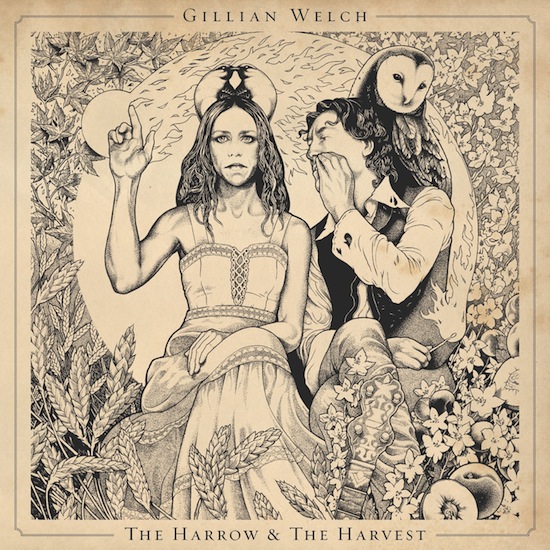
This morning American Songwriter is reporting that Gillian Welch will release a new album in late June, The Harrow & The Harvest, her first full length recording in eight years.  While Ms. Welch and her partner David Rawlings have created some of the very finest "alt-country" (or whatever term one wishes to use), a proper Gillian Welch record has been notably absent for almost a decade, and we're so happy to hear the wait has come to an end.

Gillian Welch has a unique presence within the context of this site and the ideas we're trying to understand and map out. In many respects, her earlier recordings stand as one entry-point for how urban listeners (and a largely college-educated contingent) continue to grapple with the issues of the rural arts and rural place. Indeed, she was mentioned in the New York Times cover story on the Virginia Crooked Road, and implicitly categorized as a "bluegrass" artist from the Appalachian region--two distinctions that readers of this site questioned in emails I recently received. It's a testament to the power of her music that journalists make such assumptions and mis-classifications; though born and raised in New York City and Los Angeles, her music speaks to elemental experiences well beyond any fixed place. 

What I feel is far more important is the way in which her music crafted an audience that would become the first wave of a number of the cultural movements--emanating from the cities--which offer such promising prospects for rural arts and culture. Listening back to 2003's Soul Journey, we find the musical accompaniment to what would follow shortly after that record's release: Michael Pollan's Omnivore's Dilemma, the emerging CSA movement, a renewed interest by urban folks in engaging with traditional (and rural) arts and crafts, a historical and artistic consciousness that extends beyond the current season. Though I don't have the numbers in front of me, I would bet a large percentage of people who support the worthwhile crowdfunded projects we've discussed here also have Gillian Welch records in their home.

While there has always been a vibe of "sustainability" to her music--long before such a term became over-used--there is also a suggestion, an urging to her urban listeners, that while they may not be "from the country" they can find ways to begin to culturally identify with rural traditions, and, through related kinds of agricultural acts, with rural place itself. Though this kind of identification comes with its own complications, we have to see this as a promising step towards shedding a rural-urban binary that only works to the disservice of both places. 

Here's more information on The Harrow & The Harvest, with a few songs included below:
June 28 will see the release of Gillian Welch’s first album in eight years, the stunning The Harrow & The Harvest. The Harrow & The Harvest was recorded at her own Woodland Sound Studios in Nashville, Tennessee, and was produced by guitarist and collaborator David Rawlings.
38 independent record stores will preview The Harrow & The Harvest (go to GillianWelch.com for details). Welch and Rawlings will launch a tour of seventy cities on May 20 that will stretch into the fall.
The Harrow & The Harvest “is a new Southern sound,” writes Colin Meloy of The Decemberists, “with the sort of songs you wouldn’t be surprised to hear issuing from some verdant, wooded hollow in Appalachia; Songs you’d expect to hear hollered from an Asheville grange hall, all too late in the evening. Songs with the wry humor of the back porch. Listen to this record with the lights low. Listen to it on an old radio, cradled next to your ear.”


Wednesday, May 25, 2011

The Southern Rural Black Women's Initiative and the New Visions Media Project


This week the Southern Foodways Alliance's Facebook page posted a video that caught our attention--and led us to learn more about The Southern Rural Black Women's Initiative and their New Visions program, which puts media tools in the hands of rural women and gives them the training and the platform in which to tell their their story. Here's an introduction to this organization:
The Southern Rural Black Women’s Initiative for Economic and Social Justice (SRBWI) grew out of a meeting convened by the Ford Foundation in New York, in late 2000. A small group of women met there to discuss with representatives of the Foundation, their experiences working in the rural South assisting low income, low skill and underemployed Black women who were trying to improve the quality of their and their families’ lives. In January, 2002 a slightly larger group of women held a follow-up meeting which led to the formation of the Southern Rural Black Women’s Initiative for Economic and Social Justice which works in a 77 county target area across the Black Belt regions of Alabama and Southwest Georgia, and the Delta in Mississippi.
The SRBWI now houses a number of programs designed to foster leadership skills within these communities and to recognize the qualities unique to the many social circles that comprise this region. Within that mission, the SRBWI also features the New Visions program:
New Visions engages and involves young women in the work of SRBWI through teaching marketable skills in media technology and production.    With trained local filmmaking-mentors in GA, AL and MS., New Visions Apprentices receive instruction on industry standard software, artistic forms of storytelling and technology throughout the year.   Participants produce short films and documentaries which are featured at the Unita Blackwell Young Women's Leadership Conference as well as other venues.

These films document and promote SRBWI’s work among our constituents and to others in the field.


The New Visions site offers much valuable work--in particular "Portrait" by Carol Perez, (who also created the video above), a piece that is a combination of spoken word poetry and autobiography. Like the work of the SRBWI as a whole, it reveals the other less-spoken-of stories that comprise life in the Delta. While popular notions of the Delta don't run too deep (blues, cuisine, etc), "Portrait" stands as an excellent example of the mission of this organization, and how it highlights the work of women who are, in every sense of the word, sustaining their families and their communities. (The video cannot be embedded, so please click on the "Film Production" link to locate Ms. Perez's work.)

A selection of these videos have been uploaded to SRBWI's YouTube page. As the Southern Foodways Alliance reported above, one of their oral historians, Amy Evans Streeter, has just completed a media project with New Visions. Here is the short video introduction to their work, which the SFA tells us was  "the product of an oral history workshop conducted on May 21, 2011, in Cleveland, MS:"

Tuesday, May 24, 2011

Contexts: Crooked Roads, Quilts and Meth


From considering Gabriel García Márquez's imagined Macondo to the confluences of Christo and federal land-use, we turn today in our Contexts series to one of the most valuable online spaces for discussions of rural arts and culture: the Legal Ruralism blog. We've featured the site before, but the work of Dr. Lisa Pruitt and her contributors locates itself on the contemporary edge of these issues, so it's a very important place to find a commentary not only on rural-based stories, but on the ways in which the media, the public sector, and even the legal system are constructing what it means to be "rural." 

Dr. Pruitt is a law professor at UC-Davis and a native of the Ozarks; each of these categories of experience inform her work for Legal Ruralism and grant a perspective to the site that is both intellectually rigorous and rooted in the realities of rural place and culture. It's in evidence in recent posts on Virginia's Crooked Road music trail and in her extended reportage on how issues local to the Arkansas Ozarks carry national implications. Dr. Pruitt has contributed a series of pieces considering the politics and legal issues surrounding rural Arkansas schools, as well as an extended series called Law and Order in the Ozarks that places local events within a broader discussion.

What's also unique about Legal Ruralism is the inclusion of many of Dr. Pruitt's students as contributors. As many consider how to integrate "the next generation" into these discussions, this site offers a virtual model for those conversations--as these writers come from different backgrounds and cultivate exciting interdisciplinary ideas. One piece that underlined the value of this exchange is Piecing a Life Together: Quilting, the Great (Rural) American Art. Here's how the author, Chez Marta, begins:
On my recent flight across the country, as I was gazing out the airplane’s window, I looked down on vast stretches of sparsely populated farmland. The ground looked like a big patch-work quilt of browns, greens, and yellows. The scene reminded me of the short story, A Jury of Her Peers by early feminist writer Susan Glaspell. In that story, first published in 1916, the wives of the county’s important officials tag alongside their husbands to visit a murder scene. Apparently, a rural woman has killed her husband, nobody knows how or why. The women discover the causes of this tragedy by observing the details of the first floor of the house (i.e., the kitchen and the parlor), details which only a woman would understand, while the men fail to find any evidence pointing to a possible motive of the crime. In short, the men fail to understand the intricacies of this household's dynamics.

One of the key pieces of evidence the women understand is the quilt the lady of the house worked on. They notice that her quilt had some impeccably pieced squares but, all of a sudden, the work turned shoddy, as if the maker of the quilt had suddenly lost her touch with the quilt — and with reality. The story poignantly shows why rural women, in their solitary and frugal lives, had long embraced the tradition of quilting, used it not only for providing their families with warm blankets at no extra cost, but also for telling stories about their nearly invisible lives. Continue reading here:
At the risk of merely summarizing all the valuable writing and commentary on Legal Ruralism, it's best to follow the link and spend some time perusing the archives. Folks may also be interested in Dr. Pruitt's consideration of new Appalachian drama, which has inspired us to work on an article that we will soon share in this space.

Friday, May 20, 2011

Are You Sure Hank Done It This Way?


photograph by Henry Horenstein, from his excellent collection of work in  Honky Tonk

Before the weekend begins, we'd like to give everyone a taste of a new series we will publish over the course of the summer. More information next week, but, until then, we can all start the weekend off on the right note:

Thursday, May 19, 2011

Contexts: Flooding, Farms and Modern Art

Sketch by Christo; New York Times

These three articles may be useful to consider together. Nature and agriculture, rural place and man-made artifice comingle here; combined, there's an ambiguous narrative at work, sketching a series of scenes from the ongoing discussion over how we figure the urban-rural interchange and what assets contemporary culture locates within rural place.

1. Christo's Colorado Project May Hinge on Sheep, by John Collins Rudolf, New York Times:
Nearly 20 years after the artist Christo and his wife, Jeanne-Claude, proposed draping a river canyon in southern Colorado in miles of translucent fabric, a federal thumbs up or down on the project may hinge on one factor above all others: the happiness of several hundred bighorn sheep. 

Crucial to the federal government’s decision, expected in August or September, will be a final environmental impact statement on the $50 million installation, known as “Over the River,” that federal land managers plan to unveil in coming weeks. 

Some wildlife experts worry that sheep could be displaced or even harmed if the fabric is unfurled over 5.9 miles of the Arkansas River between Salida and Cañon City. Last week the Colorado Wildlife Commission voted unanimously to urge federal officials to reject the proposal, citing in part its concerns about the bighorn, Colorado’s state animal. Continue reading here:

 Army Corps of Engineers exploding the Birds Point-New Madrid Levee; CNN

 2. Speak Your Piece: Breaching The Levee, by Timothy Collins, The Daily Yonder:
Breaching the levee on the Missouri side of the Mississippi River to lessen the impacts of the 2011 flood is more than a rural-urban conflict. 

Flooding thousands of acres of farmland to lessen the pressures of raging Ohio River waters on cities such as Cairo, Illinois, and Paducah, Kentucky, was, at the moment, clearly about saving developed urban property at the expense of less developed and less populated rural areas.

But there’s a long history here, one that reveals big mistakes by leaders of the Conservation Movement during the twentieth century. They believed that wise use entailed controlling the nation’s rivers by building levies and draining wetlands to create farmland and promote other development. 
The same principle applies to the massive irrigation projects that spurred farming and urban development in the western United States.

Sadly, in retrospect, these projects were called reclamation. People who claimed to want to preserve nature really sought to put our species above nature. They acted on misguided hubris that all of the gifts of the Earth were there for our use. Meanwhile, we made minor accommodations for plants and animals in the name of conservation. Continue reading here:

 A flooded wheat field near Vicksburg, Mississippi; Scott Olson, Getty Images

3. Flooding Takes Economic Toll, And It's Hardly Done, by Christine Hauser, New York Times:
Like the very nature of water, the trickle-down effects of the historic flooding are leaving no corner untouched. Retail gasoline prices, already at two-year highs, and food prices could rise in the region because of supply disruptions. Tens of thousands of people are unemployed, shut out of jobs at establishments that are literally under water. State and local government coffers, strained because of the economic downturn, may lose many millions of dollars in revenue from tourism and taxes. 

In about a dozen interviews, economists, farmers and industry officials said they expected hundreds of millions of dollars in damages including crop and infrastructure destruction in communities along the 740 miles of river that meanders from Memphis to New Orleans. But while the final bill has yet to be determined, the costs are already being felt. 

In Yazoo County, Miss., John Phillips, a 61-year-old farmer, said thousands of acres of his cotton and corn crops had been destroyed. “In our area in the south delta, it is a widespread and very economically devastating disaster,” he said in a telephone interview, as he tried to run a pump. He said his annual revenue would be reduced by 40 percent because it was too late to replant. Continue reading here:

Wednesday, May 18, 2011

Native American Basketry: A Living Tradition


The Autry National Center in Los Angeles is currently offering The Art of Native American Basketry: A Living Tradition, a wide-ranging look into the basket arts across cultures and geographies. Here's the Autry's introduction to this exhibit:
More than 250 objects will be on view, ranging in size from small Pomo feather baskets made for sale to tourists, to massive Apache olla baskets used for storing large quantities of seeds. Because the works shown have been selected from a remarkably wide-ranging and distinguished collection, visitors will be able to see how the materials, techniques, and designs of the baskets vary from region to region, reflecting different physical environments and traditions. Also evident will be the distinctive styles of individual artists, whose signatures can be instantly recognizable to other weavers. The Autry has invited thirteen contemporary basketweavers to serve as consultants in research and planning and will purchase a basket from each consultant to add to the permanent collection.
The museum, in its efforts to stress the contemporary element of this tradition, is also featuring a series of video installations that carry the voices of these modern basketweavers into the gallery space:


We haven't spent enough time with The Autry National Center in the past, so we look to correct this soon. Their Native Voices program, "devoted to developing and producing new works for the stage by Native American playwrights," is particularly exciting--we'll discuss these productions soon. Until then, The Autry's YouTube channel is well worth a visit; they offer over 50 well-produced videos that suggest the range of their cultural and artistic mission.